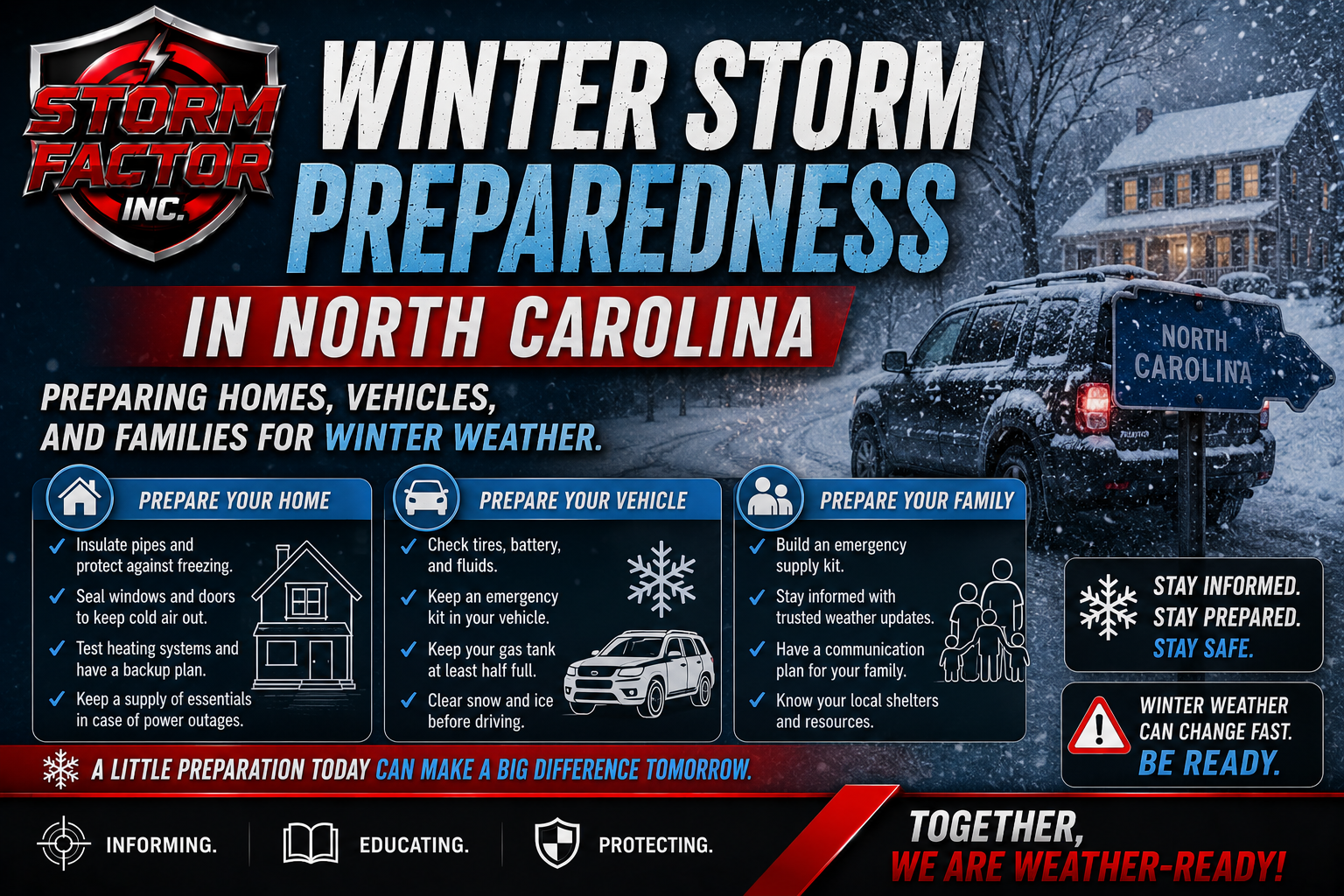
Winter Storm Preparedness in North Carolina
Preparing Homes, Vehicles, and Families for Winter Weather
While North Carolina is often associated with hurricanes, severe thunderstorms, and summer heat, winter weather can bring significant hazards across the state each year. From snow and sleet in the mountains to ice storms across the Piedmont and Coastal Plain, winter storms have the potential to disrupt travel, damage infrastructure, and threaten lives.
Unlike northern states that experience frequent winter weather, many North Carolinians face winter storms only occasionally. This can lead to a false sense of security and leave families unprepared when hazardous conditions develop.
Taking time to prepare before winter weather arrives can help protect your home, your vehicle, and your loved ones when conditions deteriorate.
North Carolina’s Unique Winter Weather Risks
Winter storms in North Carolina can produce a variety of hazards, including:
- Snow
- Sleet
- Freezing rain
- Ice accumulation
- Dangerous wind chills
- Power outages
- Hazardous travel conditions
In many cases, ice storms create greater impacts than snowfall. Even a small amount of ice can bring down trees and power lines, resulting in widespread outages that may last for days.
Understanding Winter Weather Alerts
Knowing the difference between winter weather alerts can help you take appropriate action.
Winter Storm Watch
A Winter Storm Watch means conditions are favorable for significant winter weather.
During a watch:
- Review emergency plans.
- Monitor forecasts closely.
- Gather supplies before stores become crowded.
- Prepare for potential travel disruptions.
Winter Storm Warning
A Winter Storm Warning means significant winter weather is expected or occurring.
When a warning is issued:
- Limit unnecessary travel.
- Complete preparations immediately.
- Stay informed through trusted weather sources.
Ice Storm Warning
An Ice Storm Warning indicates dangerous ice accumulations are expected.
Ice storms can lead to:
- Tree damage
- Power outages
- Impassable roads
- Falling limbs and debris
Take these warnings seriously and prepare for possible extended outages.
Preparing Your Home
Stock Emergency Supplies
Every household should have enough supplies to remain self-sufficient for several days.
Recommended items include:
- Bottled water
- Non-perishable food
- Prescription medications
- Flashlights
- Extra batteries
- Portable phone chargers
- First-aid supplies
- Blankets and warm clothing
Prepare for Power Outages
Ice storms often cause widespread power interruptions.
Before winter weather arrives:
- Fully charge electronic devices.
- Fuel generators safely and according to manufacturer instructions.
- Keep extra batteries available.
- Have alternative heat sources if appropriate and safe.
Protect Plumbing
Freezing temperatures can cause pipes to burst.
To help prevent damage:
- Insulate exposed pipes.
- Disconnect outdoor hoses.
- Allow faucets to drip during prolonged freezes.
- Open cabinet doors to allow warm air to circulate around plumbing.
Test Smoke and Carbon Monoxide Detectors
Increased use of heating equipment during winter raises fire and carbon monoxide risks.
Check detectors regularly and replace batteries as needed.
Vehicle Winter Preparedness
Travel can quickly become dangerous when snow, sleet, or ice develops.
Before winter weather arrives:
Inspect Your Vehicle
Check:
- Tires
- Brakes
- Battery condition
- Windshield wipers
- Antifreeze levels
- Headlights and taillights
Keep Your Fuel Tank Full
A fuller tank helps prevent fuel line issues and provides additional flexibility if travel becomes necessary.
Build a Winter Emergency Kit
Your vehicle should contain:
- Blankets
- Extra clothing
- Water
- Non-perishable snacks
- Flashlight
- Portable phone charger
- Ice scraper
- Jumper cables
- First-aid kit
Family Preparedness
Develop an Emergency Plan
Families should discuss:
- Communication methods
- Emergency contacts
- Shelter locations
- Alternative heating arrangements
- Evacuation plans if necessary
Stay Informed
Have multiple ways to receive weather information, including:
- NOAA Weather Radio
- Wireless Emergency Alerts
- Trusted weather apps
- Local media
- Storm Factor Inc forecasts and updates
Check on Vulnerable Individuals
Winter storms can be especially dangerous for:
- Older adults
- Young children
- Individuals with medical conditions
- Those who rely on electrically powered medical equipment
Regularly check on relatives, neighbors, and friends during winter weather events.
Staying Safe During a Winter Storm
Avoid Unnecessary Travel
Road conditions can deteriorate rapidly, especially during freezing rain and black ice events.
If travel is unavoidable:
- Slow down.
- Increase following distance.
- Avoid sudden braking.
- Keep headlights on.
Dress in Layers
Wear:
- Insulated clothing
- Gloves
- Hats
- Waterproof outerwear
Layering helps retain body heat while allowing adjustments for changing conditions.
Prevent Carbon Monoxide Poisoning
Never use:
- Generators indoors
- Grills inside homes or garages
- Gas ovens for heating
Carbon monoxide is colorless, odorless, and potentially deadly.
Winter Safety for Pets
Pets are vulnerable to cold temperatures and winter weather hazards.
Protect them by:
- Bringing pets indoors during freezing conditions.
- Providing fresh, unfrozen water.
- Wiping paws after walks to remove ice melt products and chemicals.
- Ensuring outdoor animals have proper shelter from wind and cold.
If it is too cold for you to remain outside comfortably, it is likely too cold for your pets as well.
After the Storm
Once conditions improve:
- Use caution around downed power lines.
- Watch for falling branches.
- Clear walkways carefully to prevent slips and falls.
- Continue monitoring forecasts for additional weather systems.
Remember that melting snow can refreeze overnight, creating dangerous black ice conditions.
Final Thoughts
Winter weather in North Carolina can vary dramatically from one region to another, but every resident should be prepared for the possibility of snow, ice, freezing temperatures, and power outages. A little preparation before a storm can make a significant difference when hazardous conditions arrive.
At Storm Factor Inc, our mission is to help communities stay informed and prepared for all weather hazards. By planning ahead, monitoring forecasts, and following winter safety best practices, North Carolinians can safely navigate whatever winter brings.
Stay weather aware. Stay prepared. Stay safe.

