
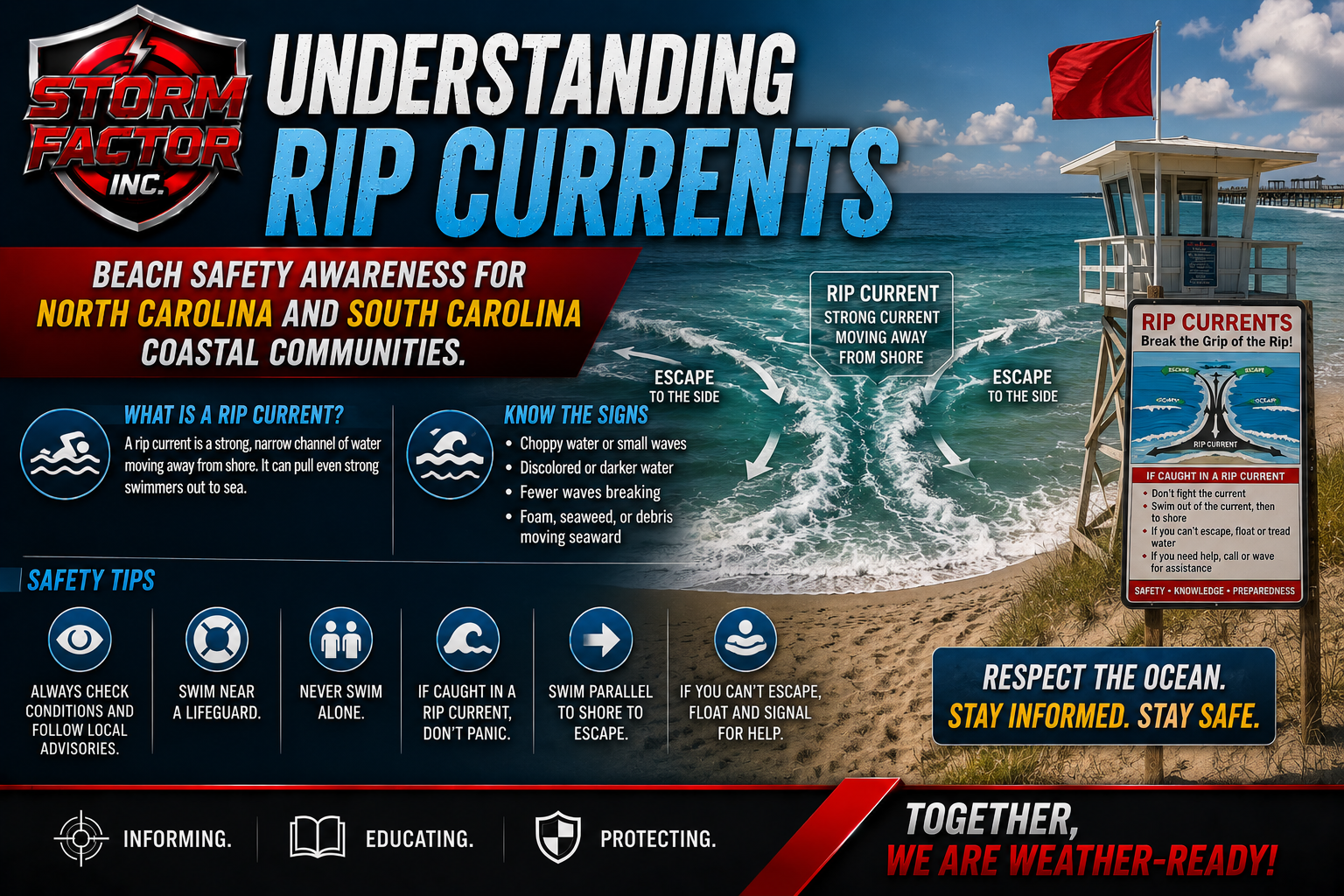
Understanding Rip Currents
Beach Safety Awareness for North Carolina and South Carolina Coastal Communities
For many residents and visitors, the beaches of North Carolina and South Carolina provide the perfect destination for relaxation, recreation, and family fun. However, beneath the beauty of the Atlantic Ocean lies one of the most dangerous coastal hazards: rip currents.
Each year, rip currents are responsible for numerous water rescues and fatalities along the East Coast. Many beachgoers are unfamiliar with how rip currents form, how to identify them, and what to do if caught in one. Understanding this often misunderstood hazard can save lives and help ensure a safer experience at the beach.
What Is a Rip Current?
A rip current is a powerful, narrow channel of water that flows away from the shoreline and out toward deeper water.
As waves continuously push water toward the beach, that water must eventually return to the ocean. In some areas, the returning water becomes concentrated into a fast-moving current that flows seaward.
Rip currents can:
- Move faster than an Olympic swimmer.
- Extend hundreds of feet offshore.
- Occur at any beach with breaking waves.
- Form suddenly and change location throughout the day.
Contrary to popular belief, rip currents do not pull people underwater. Instead, they pull swimmers away from shore, often causing panic and exhaustion.
Why Rip Currents Are So Dangerous
The greatest danger associated with rip currents is panic.
Many swimmers instinctively attempt to swim directly back to shore against the current. Because rip currents can be extremely strong, this often leads to exhaustion, making it difficult or impossible to stay afloat.
Even experienced swimmers can become overwhelmed if they fight the current.
Rip currents contribute to hundreds of rescues and numerous fatalities across the United States every year, making them one of the leading weather-related causes of death along coastal areas.
How to Spot a Rip Current
Rip currents are not always easy to identify, but there are several warning signs beachgoers should watch for.
Look for:
- A channel of darker water extending away from shore.
- A break or gap in incoming waves.
- Water that appears choppy while surrounding areas are calmer.
- Foam, seaweed, or debris moving steadily offshore.
- Differences in water color compared to surrounding areas.
Because rip currents can be difficult to recognize, swimmers should always pay close attention to local beach conditions and warning flags.
Rip Current Risks Along the Carolinas
The coastlines of North Carolina and South Carolina are particularly vulnerable to rip currents due to:
- Barrier islands
- Sandbars
- Inlets
- Tropical systems
- Strong onshore winds
Rip current threats can develop even on sunny days with relatively calm weather.
Increased risks often occur during:
- Hurricane season
- Tropical storm impacts
- Long-period ocean swells
- Strong easterly winds
Even storms located hundreds of miles offshore can generate dangerous surf and rip current conditions along Carolina beaches.
What to Do If Caught in a Rip Current
If you find yourself being pulled away from shore:
Stay Calm
The most important step is to avoid panic.
Remember that a rip current typically pulls you away from shore, not underwater.
Do Not Fight the Current
Trying to swim directly back to the beach against a strong rip current can quickly lead to exhaustion.
Swim Parallel to Shore
Once you realize you are in a rip current:
- Swim parallel to the shoreline.
- Move out of the narrow current.
- Then angle back toward shore.
Most rip currents are relatively narrow, and escaping the current often requires only a short distance of sideways movement.
Float if Necessary
If you become tired:
- Float on your back.
- Tread water.
- Conserve energy.
- Signal for help.
The current will typically weaken farther offshore.
Call and Wave for Help
If you need assistance:
- Raise one arm.
- Wave and call for help.
- Continue floating if possible.
How to Help Someone Else
If you see someone struggling in a rip current:
Do Not Become Another Victim
Many drowning fatalities involve would-be rescuers.
Instead:
- Alert a lifeguard immediately.
- Call 911 if necessary.
- Throw a flotation device.
- Encourage the swimmer to remain calm.
Unless properly trained in water rescue, avoid entering dangerous surf conditions yourself.
Understanding Beach Warning Flags
Many Carolina beaches use a flag warning system to communicate surf and rip current hazards.
Green Flag
Low hazard conditions.
Yellow Flag
Moderate surf and current risks.
Exercise caution.
Red Flag
High hazard conditions.
Dangerous surf and currents are present.
Double Red Flags
Water closed to the public.
Entering the water is prohibited.
Always follow the instructions of local beach officials and lifeguards.
Beach Safety Tips
Before entering the water:
- Check local surf forecasts.
- Review rip current outlooks.
- Swim near lifeguards whenever possible.
- Observe posted warning signs and flags.
- Never swim alone.
- Keep a close watch on children.
- Avoid entering the water during hazardous conditions.
The safest place to swim is always near an actively staffed lifeguard station.
Weather and Rip Currents
Rip current risks often increase during:
- Tropical storms
- Hurricanes
- Coastal storms
- Long-period swells generated far offshore
Before visiting the beach, monitor forecasts from trusted sources and stay informed about changing conditions.
Storm Factor Inc regularly monitors tropical systems and coastal hazards that may impact the Carolinas.
Final Thoughts
Rip currents are powerful, unpredictable, and often invisible to unsuspecting beachgoers. Fortunately, understanding how they work and knowing how to respond can dramatically improve your safety along the coast.
Whether you’re visiting the Outer Banks, the Crystal Coast, Myrtle Beach, Hilton Head Island, or any other coastal destination, taking a few moments to learn about rip currents can make all the difference.
At Storm Factor Inc, our mission is to help communities stay informed about weather and environmental hazards. By promoting awareness and preparedness, we can help ensure safer days at the beach for residents and visitors alike.
Stay weather aware. Stay informed. Stay safe.