Heat Safety: Protecting Yourself and Your Family During Extreme Heat
As summer settles across the Carolinas, many people look forward to longer days, outdoor activities, vacations, and time with family. However, rising temperatures also bring a serious weather hazard that often goes underestimated: extreme heat.
Unlike hurricanes, tornadoes, or severe thunderstorms, heat is an invisible threat. It doesn’t produce dramatic images on radar or widespread headlines every day, yet it remains one of the leading weather-related causes of death in the United States each year. Understanding heat safety can help prevent illness, injury, and even save lives.
Why Heat Safety Matters
Extreme heat occurs when temperatures and humidity combine to create conditions that place excessive stress on the human body. Our bodies naturally cool themselves through sweating, but when humidity levels are high or temperatures become excessive, that cooling process becomes less effective.
During prolonged periods of heat, individuals can quickly develop heat-related illnesses, especially if they spend extended periods outdoors, do not drink enough water, or have underlying health conditions.
Those at greatest risk include:
Older adults
Infants and young children
Individuals with chronic medical conditions
Outdoor workers
Athletes
People without access to air conditioning
Pets and livestock
Understanding Heat-Related Illnesses
Heat Cramps
Heat cramps are often the first warning sign that your body is struggling with the heat.
Symptoms may include:
Muscle spasms
Heavy sweating
Fatigue
Thirst
If heat cramps occur, move to a cooler location, drink water or sports drinks, and rest until symptoms improve.
Heat Exhaustion
Heat exhaustion is more serious and requires immediate action.
Symptoms include:
Heavy sweating
Weakness
Dizziness
Headache
Nausea
Cool, clammy skin
Rapid pulse
If someone develops heat exhaustion, move them to a cool place, loosen clothing, provide cool water if they are conscious, and apply cool compresses.
Heat Stroke
Heat stroke is a life-threatening emergency.
Symptoms include:
Body temperature above 103°F
Hot, red skin
Confusion
Loss of consciousness
Seizures
Rapid pulse
Call 911 immediately if heat stroke is suspected. While waiting for emergency responders, move the person to a cooler location and begin cooling measures.
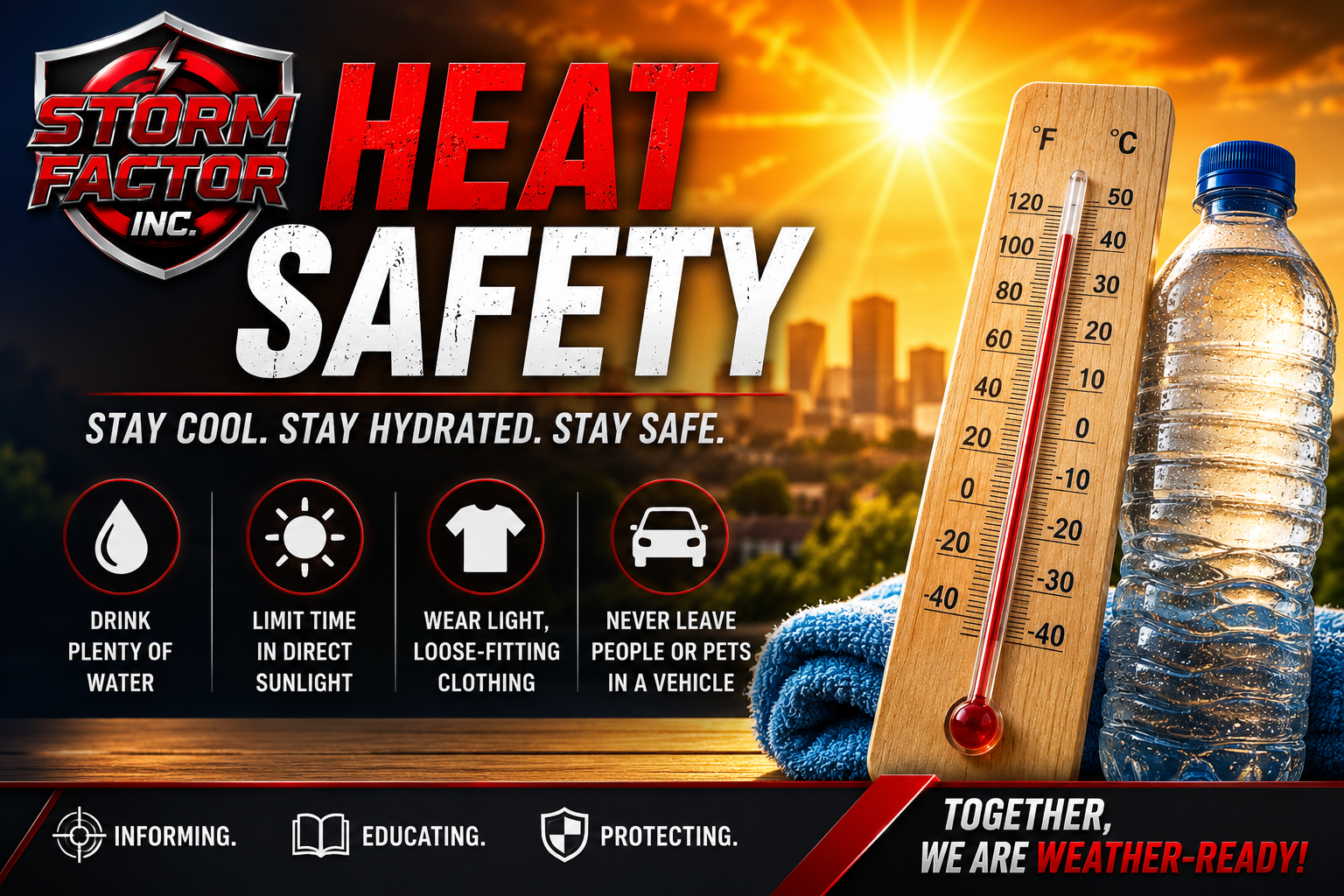
Stay Hydrated
One of the most effective ways to prevent heat illness is proper hydration.
Remember to:
Drink water frequently, even if you are not thirsty.
Increase fluid intake during outdoor activities.
Avoid excessive alcohol consumption.
Limit sugary and highly caffeinated beverages.
Carry a refillable water bottle when traveling.
A good rule of thumb is to begin hydrating before outdoor activities and continue drinking water throughout the day.
Plan Outdoor Activities Wisely
When possible:
Schedule strenuous activities during the morning or evening hours.
Take frequent breaks in shaded or air-conditioned areas.
Wear lightweight, light-colored clothing.
Use sunscreen to prevent sunburn, which can reduce the body’s ability to cool itself.
If a Heat Advisory or Extreme Heat Warning has been issued, consider postponing non-essential outdoor activities.
Never Leave Children or Pets in Vehicles
Even on a seemingly mild day, temperatures inside a parked vehicle can rise rapidly.
Within minutes, the interior of a vehicle can become dangerously hot, leading to heat stroke and death.
Always:
Check the back seat before locking your vehicle.
Keep vehicles locked when not in use.
Never leave children, pets, or vulnerable adults unattended.
Remember: cracking a window does not provide adequate protection.
Check on Vulnerable Neighbors
Extreme heat affects entire communities. During prolonged heat events:
Check on elderly relatives and neighbors.
Ensure they have access to air conditioning or cooling centers.
Help them obtain water and necessary supplies.
Encourage them to limit outdoor activities during peak heat.
A simple phone call or visit can make a significant difference.
Heat Safety for Pets
Our pets are especially vulnerable to extreme heat.
To keep pets safe:
Provide fresh, cool water at all times.
Ensure access to shade.
Avoid walking pets during the hottest part of the day.
Test pavement with your hand before walks; if it’s too hot for your hand, it’s too hot for their paws.
Never leave pets inside vehicles.
Watch for signs of overheating such as excessive panting, drooling, weakness, or collapse.
Build a Summer Safety Kit
Consider keeping a heat safety kit available that includes:
Bottled water
Electrolyte replacement drinks
Sunscreen
Cooling towels
Battery-powered fan
First aid supplies
Portable phone charger
Emergency contact information
Being prepared before a heat emergency develops can help reduce risks.
Stay Weather Aware
Heat is a weather hazard that deserves the same level of attention as severe thunderstorms, hurricanes, and winter storms. Monitor forecasts daily, pay attention to Heat Advisories and Extreme Heat Warnings, and make plans to stay cool when dangerous conditions are expected.
At Storm Factor Inc, our mission is to help communities stay informed, prepared, and resilient during all types of weather hazards. Whether it’s a tropical cyclone, severe thunderstorm, winter weather event, or extreme heat, preparation remains your best defense.
Remember:
Stay hydrated. Stay cool. Stay informed. Stay safe.
For the latest forecasts, preparedness information, and weather safety resources, visit StormFactorWX.org and follow Storm Factor Inc on social media.