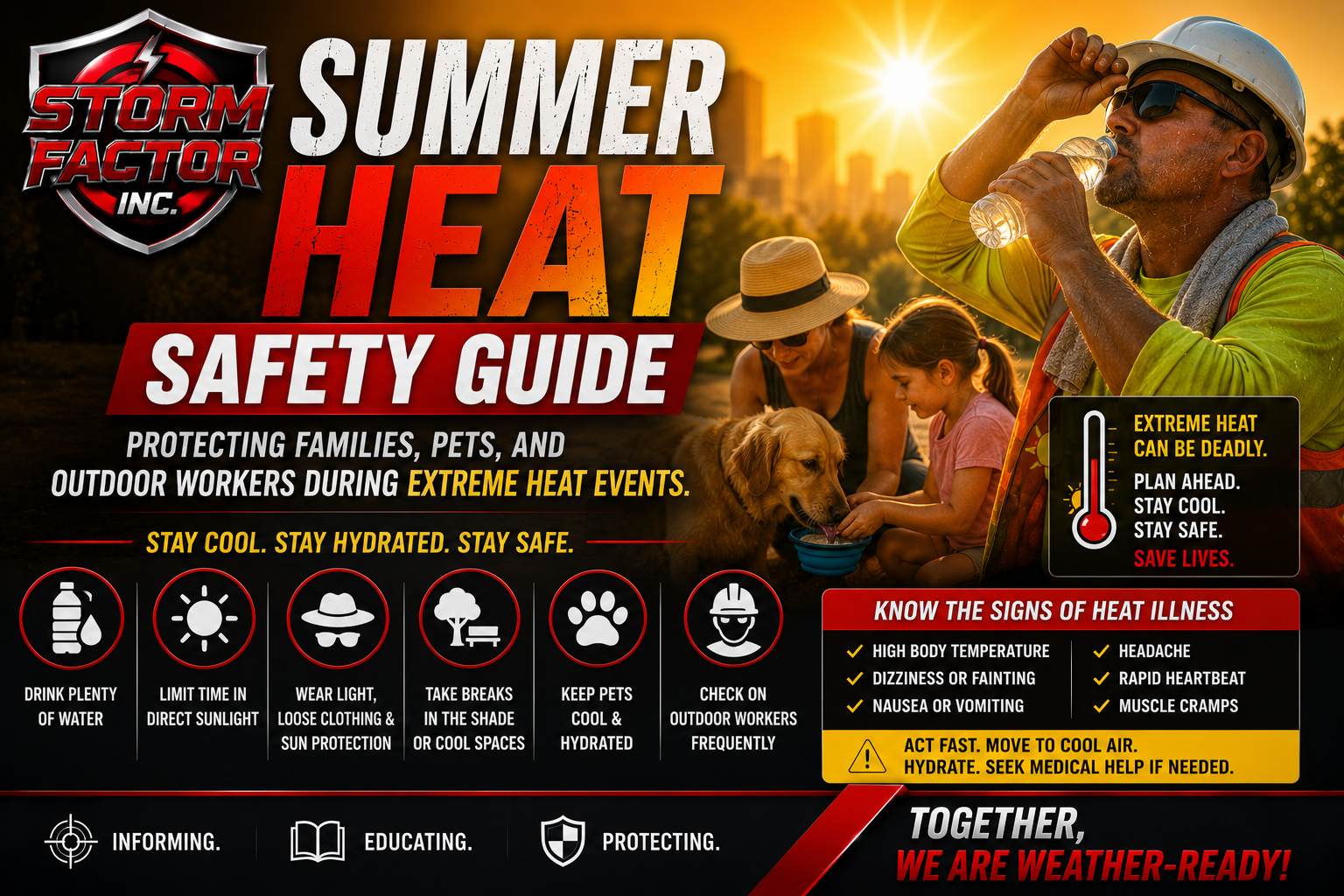
Summer Heat Safety Guide: Protecting Families, Pets, and Outdoor Workers
Summer brings longer days, outdoor activities, vacations, and opportunities to enjoy the sunshine. However, it also brings the risk of extreme heat, one of the deadliest weather hazards in the United States. Unlike tornadoes, hurricanes, and severe thunderstorms, heat-related illnesses often develop quietly and can become life-threatening before many people recognize the danger.
Whether you’re spending time outdoors, working in the heat, or caring for loved ones and pets, understanding heat safety is essential. Taking simple precautions can help prevent heat-related illnesses and save lives.
Understanding Extreme Heat
Extreme heat occurs when temperatures and humidity combine to create dangerous conditions for the human body. High humidity reduces the body’s ability to cool itself through sweating, increasing the risk of heat exhaustion and heat stroke.
The heat index, often referred to as the “feels-like” temperature, is an important measurement to monitor during the summer months. When heat index values climb above 100°F, the risk of heat-related illness increases significantly, especially for vulnerable populations.
Who Is Most at Risk?
While anyone can be affected by extreme heat, certain groups face a greater risk:
- Older adults
- Infants and young children
- Individuals with chronic medical conditions
- People without access to air conditioning
- Outdoor workers
- Athletes and recreational enthusiasts
- Pets
Understanding these risks can help families and communities take proactive measures to protect those who are most vulnerable.
Recognizing Heat-Related Illnesses
Heat Cramps
Heat cramps are often the first sign that the body is struggling to cope with high temperatures.
Symptoms include:
- Muscle cramps or spasms
- Heavy sweating
- Fatigue
- Thirst
Move to a cooler location, drink water, and rest until symptoms improve.
Heat Exhaustion
Heat exhaustion occurs when the body loses excessive water and salt through sweating.
Symptoms may include:
- Heavy sweating
- Weakness
- Dizziness
- Nausea
- Headache
- Cool, pale, clammy skin
- Rapid pulse
If heat exhaustion is suspected:
- Move to an air-conditioned or shaded area.
- Drink cool water slowly.
- Loosen or remove unnecessary clothing.
- Apply cool, wet cloths to the skin.
Seek medical attention if symptoms worsen or do not improve.
Heat Stroke: A Medical Emergency
Heat stroke is the most serious heat-related illness and requires immediate medical attention.
Symptoms include:
- Body temperature above 103°F
- Hot, red skin
- Confusion or altered mental status
- Slurred speech
- Seizures
- Loss of consciousness
Call 911 immediately if someone is experiencing heat stroke symptoms. While waiting for emergency responders, move the individual to a cooler location and attempt to lower their body temperature.
Protecting Your Family
Stay Hydrated
Drink plenty of water throughout the day, even if you do not feel thirsty.
Avoid excessive consumption of:
- Alcohol
- Highly caffeinated beverages
- Sugary drinks
These can contribute to dehydration.
Limit Outdoor Activities
Schedule strenuous activities during cooler parts of the day, such as:
- Early morning
- Late evening
Take frequent breaks in air-conditioned or shaded locations.
Dress for the Heat
Wear:
- Lightweight clothing
- Loose-fitting garments
- Light-colored fabrics
- Wide-brimmed hats
- Sunglasses
Apply sunscreen regularly to protect against sunburn, which can reduce the body’s ability to cool itself.
Check on Vulnerable Individuals
During heat waves, regularly check on:
- Elderly relatives
- Neighbors living alone
- Individuals with medical conditions
A simple phone call or visit can make a significant difference.
Never Leave Children in Vehicles
One of the most dangerous summer hazards is leaving a child unattended in a vehicle.
Even on a relatively mild day, temperatures inside a parked vehicle can rise rapidly to life-threatening levels within minutes.
Remember:
Look Before You Lock.
Before leaving your vehicle:
- Check the back seat.
- Place essential items such as a purse, phone, or work badge near the child as a reminder.
- Always lock vehicles when not in use.
Keeping Pets Safe During Extreme Heat
Our pets are vulnerable to heat-related illness just like humans.
Provide Fresh Water
Ensure pets always have access to clean, cool water.
Limit Outdoor Exposure
Walk pets during:
- Early morning
- Late evening
Avoid strenuous activity during the hottest part of the day.
Protect Their Paws
Hot pavement can cause severe burns to paw pads.
A simple test:
Place the back of your hand on the pavement for seven seconds. If it’s too hot for your hand, it’s too hot for your pet.
Never Leave Pets in Vehicles
Even with windows cracked, temperatures inside a vehicle can quickly become deadly.
Watch for Signs of Heat Stress
Symptoms may include:
- Excessive panting
- Drooling
- Weakness
- Vomiting
- Collapse
Seek veterinary care immediately if heat-related illness is suspected.
Heat Safety for Outdoor Workers
Construction workers, utility crews, landscapers, agricultural workers, first responders, and others who work outdoors face elevated risks during extreme heat.
Follow the Three Key Principles
Water
Drink water frequently throughout the workday.
Do not wait until you feel thirsty.
Rest
Take regular breaks in shaded or air-conditioned environments.
Shade
Whenever possible, perform tasks in shaded areas and use cooling stations.
Watch for Coworkers
Heat illness can impair judgment and awareness. Workers should monitor one another for signs of heat exhaustion and heat stroke.
Employers should have emergency action plans in place for heat-related incidents.
Be Prepared for Heat Emergencies
Before summer temperatures peak:
- Know where local cooling centers are located.
- Keep extra water available.
- Maintain air conditioning systems.
- Have backup plans during power outages.
- Monitor forecasts and heat advisories.
When local officials issue heat alerts, take them seriously. Extreme heat can become dangerous quickly, particularly during prolonged heat waves.
Final Thoughts
Extreme heat is often called a “silent killer” because its dangers are not always immediately visible. Every year, preventable heat-related illnesses and deaths occur across the country.
By staying hydrated, recognizing the signs of heat illness, protecting children and pets, and taking precautions during outdoor activities, families and communities can stay safe throughout the summer season.
At Storm Factor Inc, our mission is to help communities prepare for and respond to hazardous weather conditions. As temperatures rise, remember that awareness, preparation, and common-sense safety measures can make all the difference.
Stay weather aware. Stay cool. Stay safe.