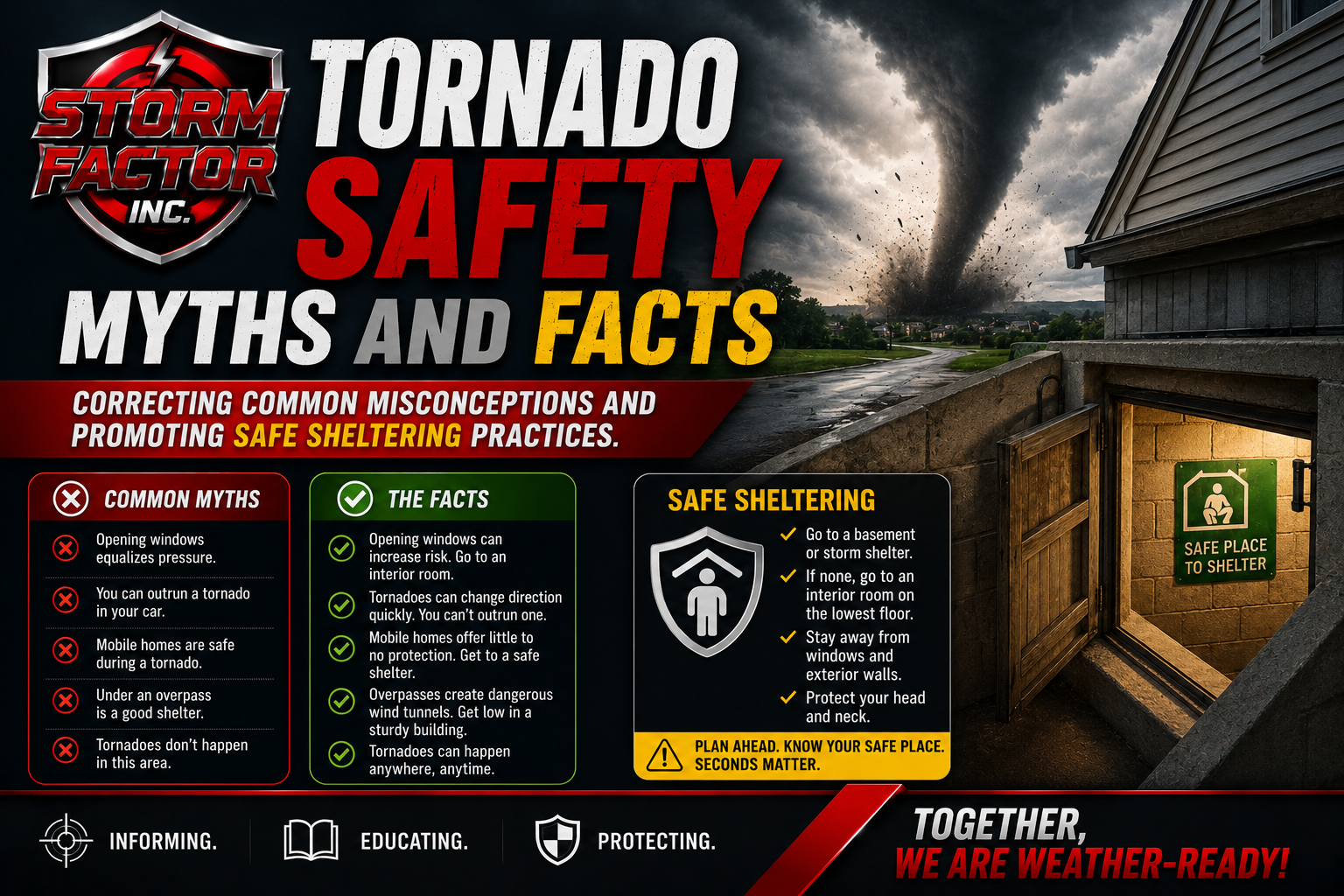
Tornado Safety Myths and Facts
Correcting Common Misconceptions and Promoting Safe Sheltering Practices
Tornadoes are among the most violent and unpredictable weather phenomena on Earth. While forecasting and warning technology have improved significantly over the years, dangerous myths and outdated information continue to circulate among the public. Unfortunately, following bad advice during a tornado can place lives at greater risk.
Understanding the facts about tornado safety is essential for making informed decisions when severe weather threatens. Let’s separate myth from reality and review the safest actions to take during a tornado warning.
Why Tornado Safety Knowledge Matters
Every year, tornadoes cause injuries, fatalities, and billions of dollars in property damage across the United States. While some tornadoes remain relatively weak, others can produce devastating winds exceeding 200 mph.
The difference between life and death often comes down to preparation, awareness, and seeking shelter in the right location at the right time.
Myth #1: Opening Windows Equalizes Pressure and Protects Your Home
Fact:
This is one of the oldest and most dangerous tornado myths.
Many people still believe they should open windows before a tornado arrives to prevent their home from “exploding” due to pressure differences.
In reality:
- Opening windows wastes valuable time.
- Tornado damage is caused primarily by extreme winds and flying debris.
- Open windows can actually allow stronger winds into the structure.
What You Should Do Instead
When a tornado warning is issued:
- Move immediately to your designated shelter area.
- Do not spend time opening windows.
- Focus on protecting yourself and your family.
Myth #2: Highway Overpasses Are Safe Tornado Shelters
Fact:
Overpasses are extremely dangerous during tornadoes.
This misconception gained popularity after widely circulated images from past tornado events. However, research and real-world experience have shown that overpasses can create a wind tunnel effect that increases wind speeds and flying debris.
Risks include:
- Wind acceleration beneath the structure.
- Exposure to airborne debris.
- Limited escape options.
- Traffic congestion.
What You Should Do Instead
If driving and a tornado is approaching:
- Seek shelter in a sturdy building if possible.
- If no shelter is available and escape is impossible, move to a low-lying area away from vehicles and protect your head and neck.
Never shelter beneath an overpass.
Myth #3: Tornadoes Cannot Cross Rivers, Lakes, or Mountains
Fact:
Tornadoes are not stopped by rivers, lakes, hills, or mountains.
History has repeatedly shown tornadoes crossing:
- Major rivers
- Large lakes
- Mountainous terrain
- Urban areas
Geography may influence storm behavior, but it does not provide protection from tornadoes.
What You Should Do Instead
Take every tornado warning seriously regardless of local terrain or nearby bodies of water.
Myth #4: The Southwest Corner of a Basement Is Always the Safest Place
Fact:
Older tornado safety guidance often recommended the southwest corner of a basement.
Today, meteorologists and emergency managers emphasize:
- Being underground is the most important factor.
- Staying away from windows is critical.
- Interior shelter areas provide the best protection.
The specific corner of a basement is generally less important than ensuring you are in a protected location away from exterior walls and potential debris.
What You Should Do Instead
Seek shelter in:
- A basement
- Storm shelter
- Safe room
- Interior room on the lowest floor
Use blankets, helmets, mattresses, or sturdy furniture for additional protection.
Myth #5: Tornadoes Always Have Visible Funnels
Fact:
Not all tornadoes are easy to see.
Many tornadoes are:
- Rain-wrapped
- Hidden by terrain
- Obscured by darkness
- Embedded within heavy precipitation
Some of the deadliest tornadoes occur at night when visibility is extremely limited.
What You Should Do Instead
Never rely solely on visual confirmation.
Have multiple ways to receive warnings:
- Wireless Emergency Alerts
- NOAA Weather Radio
- Weather apps
- Local media
- Storm Factor Inc forecasts and updates
Myth #6: Mobile Homes Are Safe During Tornadoes
Fact:
Mobile homes and manufactured housing are highly vulnerable to tornado winds.
Even well-anchored units can sustain catastrophic damage during strong thunderstorms and tornadoes.
What You Should Do Instead
Residents of mobile homes should:
- Identify a nearby sturdy shelter in advance.
- Know where community storm shelters are located.
- Leave for shelter immediately when a tornado warning is issued.
Waiting until a tornado is visible may be too late.
Myth #7: If You Can See the Tornado, You’re Safe
Fact:
Distance can be difficult to judge during severe weather.
A tornado may appear stationary while actually moving directly toward your location.
In addition:
- Multiple tornadoes may exist within the same storm.
- Dangerous debris can travel far from the tornado itself.
- Storms can change direction unexpectedly.
What You Should Do Instead
If a warning has been issued for your area, seek shelter immediately regardless of whether you can see a tornado.
Where Is the Safest Place During a Tornado?
Best Options
The safest locations include:
- A FEMA-compliant safe room
- A purpose-built storm shelter
- A basement
- A small interior room on the lowest floor of a sturdy building
Additional Protection
Once sheltered:
- Cover your head and neck.
- Wear a helmet if available.
- Use pillows, blankets, or mattresses as protection from debris.
- Keep pets with you if possible.
Have a Tornado Safety Plan
Before severe weather season begins:
Know Your Shelter Location
Every family member should know where to go immediately when a warning is issued.
Build an Emergency Kit
Include:
- Flashlights
- Batteries
- First-aid supplies
- Water
- Medications
- Phone chargers
- NOAA Weather Radio
Practice Your Plan
Conduct tornado drills periodically so everyone knows what to do under stress.
Final Thoughts
When it comes to tornado safety, misinformation can be dangerous. Following outdated myths or relying on incorrect assumptions may place you and your family at unnecessary risk.
The best defense against tornadoes is preparation, reliable weather information, and immediate action when warnings are issued.
At Storm Factor Inc, we are committed to helping communities stay informed before severe weather strikes. By understanding the facts and following proven safety practices, you can greatly improve your chances of staying safe during tornado season.
Stay weather aware. Stay prepared. Stay safe.