North Carolina Drought Update: Recent Improvements Offer Hope, But Recovery Remains a Long Road
After months of exceptionally dry conditions across North Carolina, recent rainfall has provided some welcome relief. While portions of the state have experienced measurable improvements in drought conditions, significant impacts remain, and much more rainfall will be needed to fully recover from one of the most severe drought events the state has experienced in nearly two decades.
A Drought Months in the Making
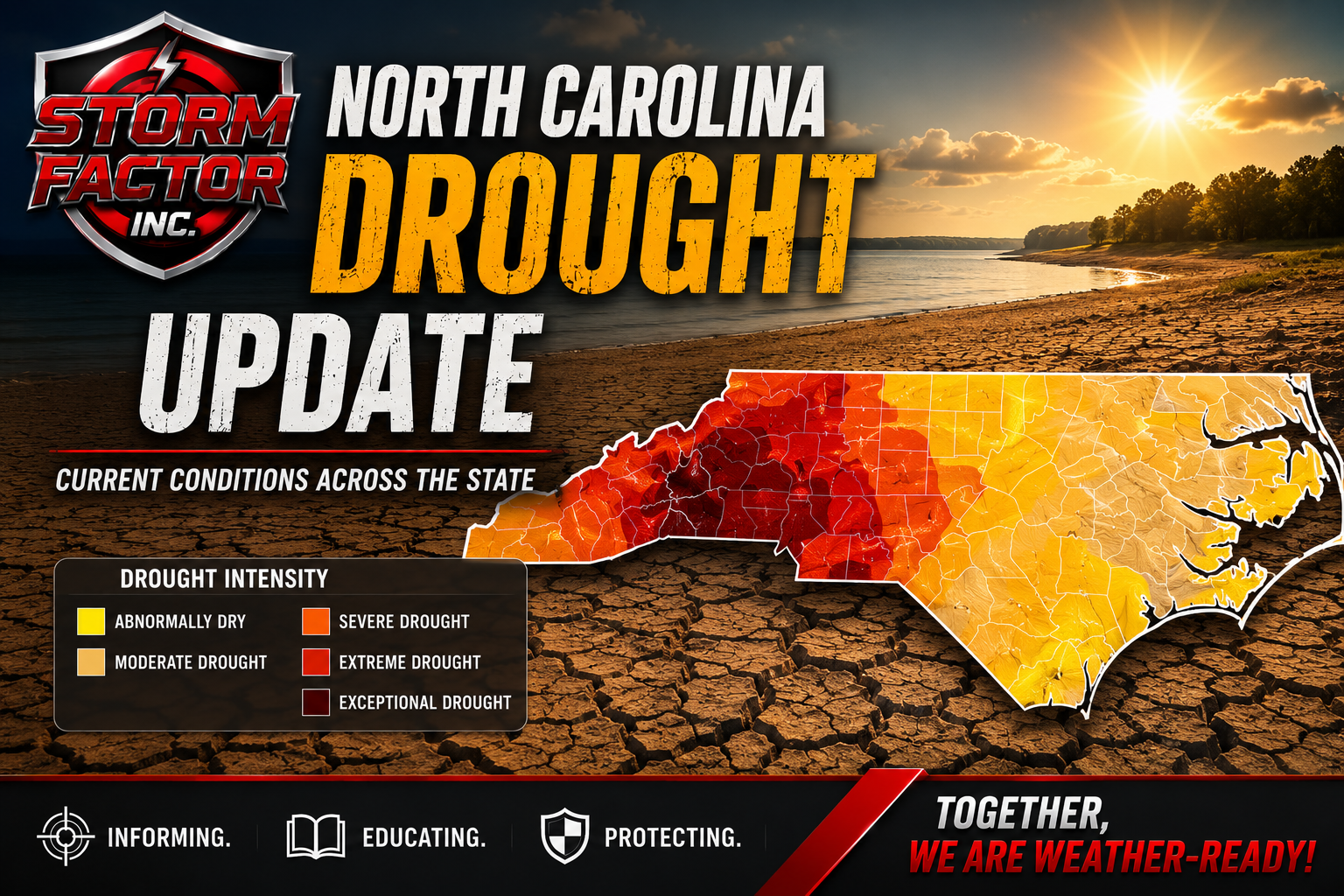
North Carolina’s drought began developing during the fall of 2025 and intensified throughout the winter and spring of 2026. Many locations recorded some of their driest six-month periods on record, with rainfall deficits exceeding ten inches in several areas. By late April and May, much of the state was classified in Extreme Drought (D3), while portions of western North Carolina reached the highest drought category, Exceptional Drought (D4).
The drought has impacted streamflows, groundwater supplies, agriculture, reservoirs, and wildfire potential across the state. Many waterways have remained well below normal levels, and soil moisture deficits have persisted despite occasional rainfall events.
Recent Rainfall Brings Improvement
The latest U.S. Drought Monitor update, reflected in North Carolina’s June 2 drought assessment, shows encouraging signs of improvement across portions of the state. Recent rounds of rainfall helped reduce drought intensity in some areas, particularly across parts of the foothills, mountains, and sections of the Piedmont. Approximately 28 percent of North Carolina saw drought improvement during the most recent reporting period.
While these improvements are certainly welcome, every county in North Carolina continues to experience at least some level of drought or abnormal dryness. Significant drought conditions remain entrenched across large portions of the state.
Why More Rain Is Still Needed
One challenge with drought recovery is that a single heavy rain event rarely solves the problem.
When soils become extremely dry, they often harden, causing rainfall to run off rather than soak deeply into the ground. While recent rainfall has improved surface moisture and greened vegetation in some locations, groundwater reserves, reservoirs, and streamflows require repeated rainfall events over an extended period to fully recover.
Climate experts note that consistent, soaking rainfall is far more beneficial for drought recovery than brief periods of heavy downpours. Groundwater recharge and reservoir recovery often lag behind visible improvements in vegetation and soil moisture.
Fire Danger Remains Elevated
Even as drought conditions improve in some areas, wildfire concerns continue across North Carolina. Dry vegetation, low soil moisture, and periods of warm temperatures can quickly increase fire danger when rainfall becomes limited.
Residents should continue exercising caution with outdoor burning and always follow local burn restrictions and guidance from emergency management officials.
Looking Ahead
Long-range outlooks suggest opportunities for additional rainfall during the early summer months, which could help further reduce drought impacts across the state. However, forecasters caution that drought recovery will likely be a gradual process. Entering the hotter months of the year means evaporation rates will increase, making continued rainfall essential for meaningful improvement.
For now, North Carolinians can be encouraged by the recent progress while recognizing that drought recovery remains far from complete.
What You Can Do
- Residents can help support drought recovery efforts by:
- Conserving water whenever possible.
- Repairing leaking faucets and irrigation systems.
- Watering lawns and gardens responsibly.
- Following local water-use restrictions.
- Staying informed on drought conditions in their community.
- Practicing wildfire safety during outdoor activities.
Storm Factor Outlook
The recent rainfall has provided a much-needed step in the right direction for North Carolina. However, drought conditions remain widespread, and recovery will require weeks to months of additional beneficial rainfall.
Storm Factor Inc will continue monitoring drought conditions, rainfall trends, and wildfire concerns throughout the summer season and will provide updates as conditions evolve.
Remember: One rainy week can improve conditions, but ending a major drought requires persistence from Mother Nature.
For the latest weather information, preparedness resources, and drought updates, visit StormFactorWX.org and follow Storm Factor Inc on social media. 📡🌦️🌱
Data referenced from the North Carolina Drought Management Advisory Council, U.S. Drought Monitor, North Carolina State Climate Office, NOAA, and National Weather Service reports current as of June 6, 2026.