Severe Thunderstorm Preparedness: Understanding Watches, Warnings, Lightning, Hail, and Damaging Winds
When many people think of dangerous weather, tornadoes and hurricanes often come to mind. However, severe thunderstorms are among the most common and destructive weather hazards across the United States. These storms can produce damaging winds, large hail, dangerous lightning, flash flooding, and even tornadoes with little warning.
Understanding severe thunderstorm risks and knowing how to respond can help protect lives and property before, during, and after a storm.
What Is a Severe Thunderstorm?
According to meteorological standards, a thunderstorm is considered severe when it produces one or more of the following:
- Wind gusts of 58 mph or greater
- Hail measuring 1 inch in diameter or larger
- A tornado
While these criteria define a severe thunderstorm, even storms that fall below these thresholds can still be dangerous.
Understanding Watches and Warnings
One of the most important parts of severe weather preparedness is knowing the difference between a watch and a warning.
Severe Thunderstorm Watch
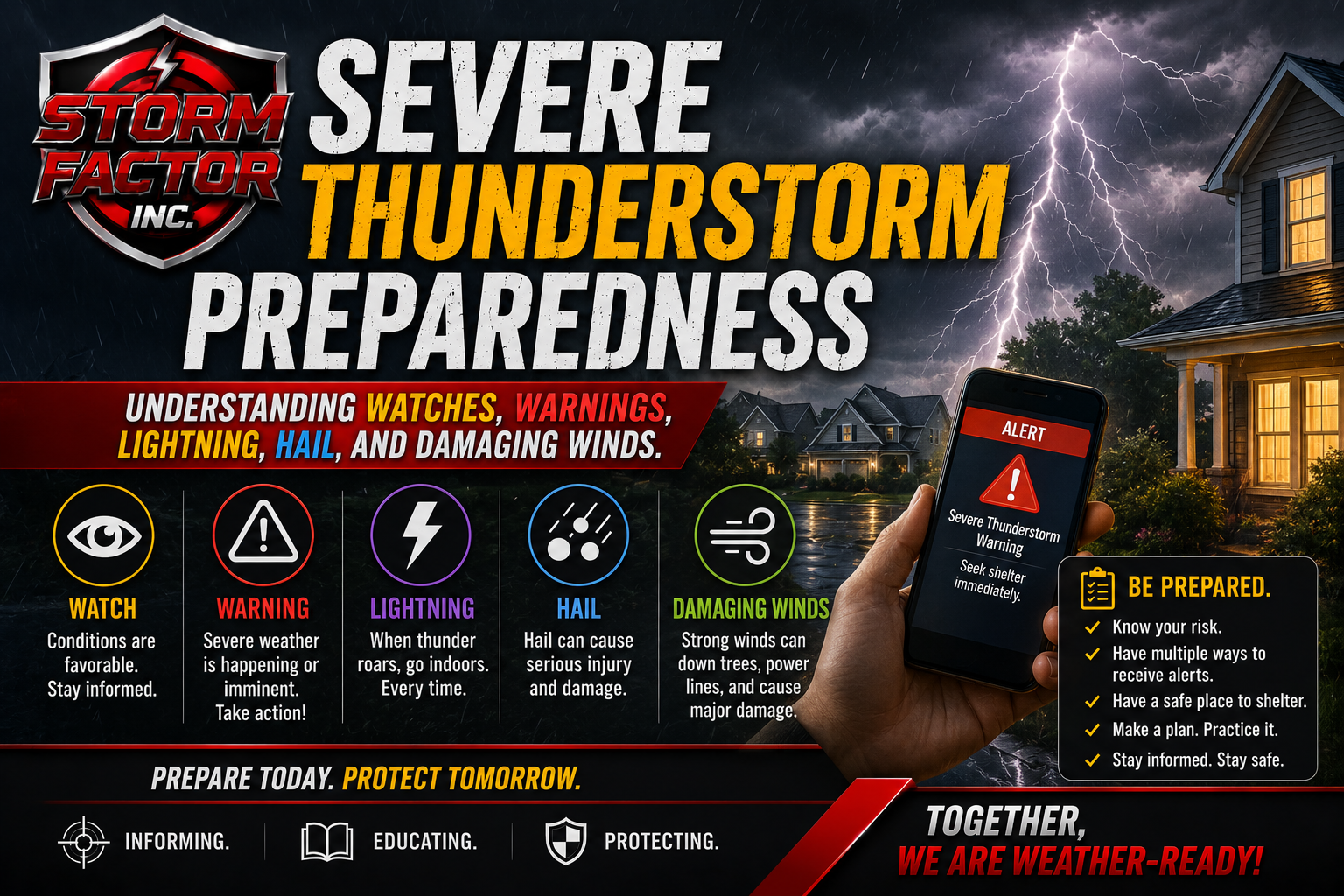
A Severe Thunderstorm Watch means conditions are favorable for severe thunderstorms to develop.
When a watch is issued:
- Review your safety plans.
- Monitor weather updates.
- Be prepared to take action quickly if conditions worsen.
- Secure outdoor objects that could become airborne.
Think of a watch as a signal to be alert and prepared.
Severe Thunderstorm Warning
A Severe Thunderstorm Warning means a severe storm is occurring or imminent and poses an immediate threat to life and property.
Warnings are typically issued when:
- Severe weather is detected by weather radar.
- Trained storm spotters report severe conditions.
- Law enforcement or emergency management confirms severe weather impacts.
When a warning is issued:
- Move indoors immediately.
- Stay away from windows.
- Seek shelter in a sturdy building.
- Continue monitoring weather information.
Think of a warning as a signal to take action now.
Lightning: Every Storm Is Dangerous
Lightning is one of the most underestimated weather hazards.
Every thunderstorm produces lightning, and a single strike can:
- Cause cardiac arrest
- Result in serious burns
- Start fires
- Damage electrical systems
Lightning can strike several miles away from a thunderstorm, even when skies overhead appear clear.
Lightning Safety Tips
Remember:
When Thunder Roars, Go Indoors.
If you hear thunder:
- Immediately move inside a substantial building.
- Avoid open fields.
- Stay away from water.
- Do not shelter under isolated trees.
- Avoid using corded electrical devices.
Remain indoors for at least 30 minutes after the last clap of thunder.
Hail: More Than Just an Inconvenience
Large hail can cause significant damage in a matter of seconds.
Hail can:
- Break windows
- Damage roofs and siding
- Destroy vehicles
- Injure people and animals
- Damage crops and gardens
Some severe thunderstorms can produce hail larger than golf balls, baseballs, or even softballs.
Hail Safety Tips
If a hailstorm approaches:
- Move vehicles into a garage or covered area if time allows.
- Stay indoors.
- Keep away from windows and skylights.
- Protect pets by bringing them inside.
Never go outside to observe a hailstorm.
Damaging Winds: The Most Common Severe Weather Threat
While tornadoes receive significant attention, damaging straight-line winds often cause more widespread damage.
Severe thunderstorm wind gusts can:
- Uproot trees
- Damage roofs
- Knock down power lines
- Create dangerous flying debris
- Cause widespread power outages
Some severe thunderstorms produce winds exceeding 70 to 90 mph, resulting in damage comparable to weak tornadoes.
Wind Safety Tips
Before storms arrive:
- Secure outdoor furniture.
- Store loose items.
- Trim dead tree limbs when safe to do so.
During a warning:
- Stay indoors.
- Move to an interior room if winds become intense.
- Avoid windows and glass doors.
Preparing Before Severe Weather Strikes
Preparation is the key to reducing risks during severe weather events.
Build an Emergency Kit
Your emergency kit should include:
- Bottled water
- Non-perishable food
- Flashlights
- Extra batteries
- First-aid supplies
- Portable phone chargers
- NOAA Weather Radio
- Necessary medications
Have Multiple Ways to Receive Alerts
Do not rely on a single source of weather information.
Consider:
- Wireless Emergency Alerts
- Weather apps
- NOAA Weather Radio
- Local media outlets
- Storm Factor Inc updates and forecasts
Know Your Safe Place
Identify the safest location in your home:
- Interior room
- Lowest floor possible
- Away from windows and exterior walls
Families should discuss severe weather plans before storms develop.
After the Storm
Once severe weather has passed:
- Stay clear of downed power lines.
- Report hazards to local authorities.
- Use generators safely outdoors.
- Watch for damaged trees and structures.
- Continue monitoring weather conditions in case additional storms develop.
Remember that multiple rounds of severe weather can occur during the same day.
Final Thoughts
Severe thunderstorms can develop rapidly and produce dangerous conditions with little warning. Understanding the difference between watches and warnings, respecting the dangers of lightning, preparing for hail, and taking damaging wind threats seriously can significantly reduce your risk during severe weather.
At Storm Factor Inc, our mission is to provide reliable weather information and promote public safety before, during, and after hazardous weather events. By staying informed and prepared, you can help protect yourself, your family, your pets, and your property when severe thunderstorms threaten.
Stay weather aware. Stay prepared. Stay safe.