Why Flash Flooding Is So Dangerous
When severe weather strikes, many people focus on lightning, hail, tornadoes, or damaging winds. However, one of the deadliest weather hazards in the United States is often overlooked: flash flooding.
Flash floods can develop rapidly, sometimes within minutes of heavy rainfall, leaving little time for preparation or evacuation. Every year, flash floods claim lives, damage property, and leave communities struggling to recover. Understanding the dangers of flash flooding can help keep you and your family safe.
What Is Flash Flooding?
A flash flood is a rapid rise of water in low-lying areas, creeks, streams, urban streets, and flood-prone locations. Unlike river flooding, which may take days to develop, flash flooding can occur within minutes or hours after intense rainfall.
Flash floods are commonly caused by:
- Slow-moving thunderstorms
- Repeated rounds of heavy rain over the same area
- Tropical systems and hurricanes
- Dam or levee failures
- Rapid runoff from urban areas
Even areas experiencing drought can experience dangerous flash flooding because dry, hardened soil often cannot absorb heavy rainfall quickly.
Why Flash Flooding Is So Dangerous
Water Rises Faster Than Most People Realize
One of the greatest dangers of flash flooding is how quickly conditions can change. A dry ditch, creek, or roadway can become a raging torrent in a matter of minutes.
People often underestimate the speed and force of moving water. What appears to be a shallow stream crossing the road may actually conceal swift currents capable of sweeping away vehicles and people.
Vehicles Are Especially Vulnerable
Many flood-related deaths occur when motorists attempt to drive through flooded roadways.
Just a small amount of moving water can impact vehicle control:
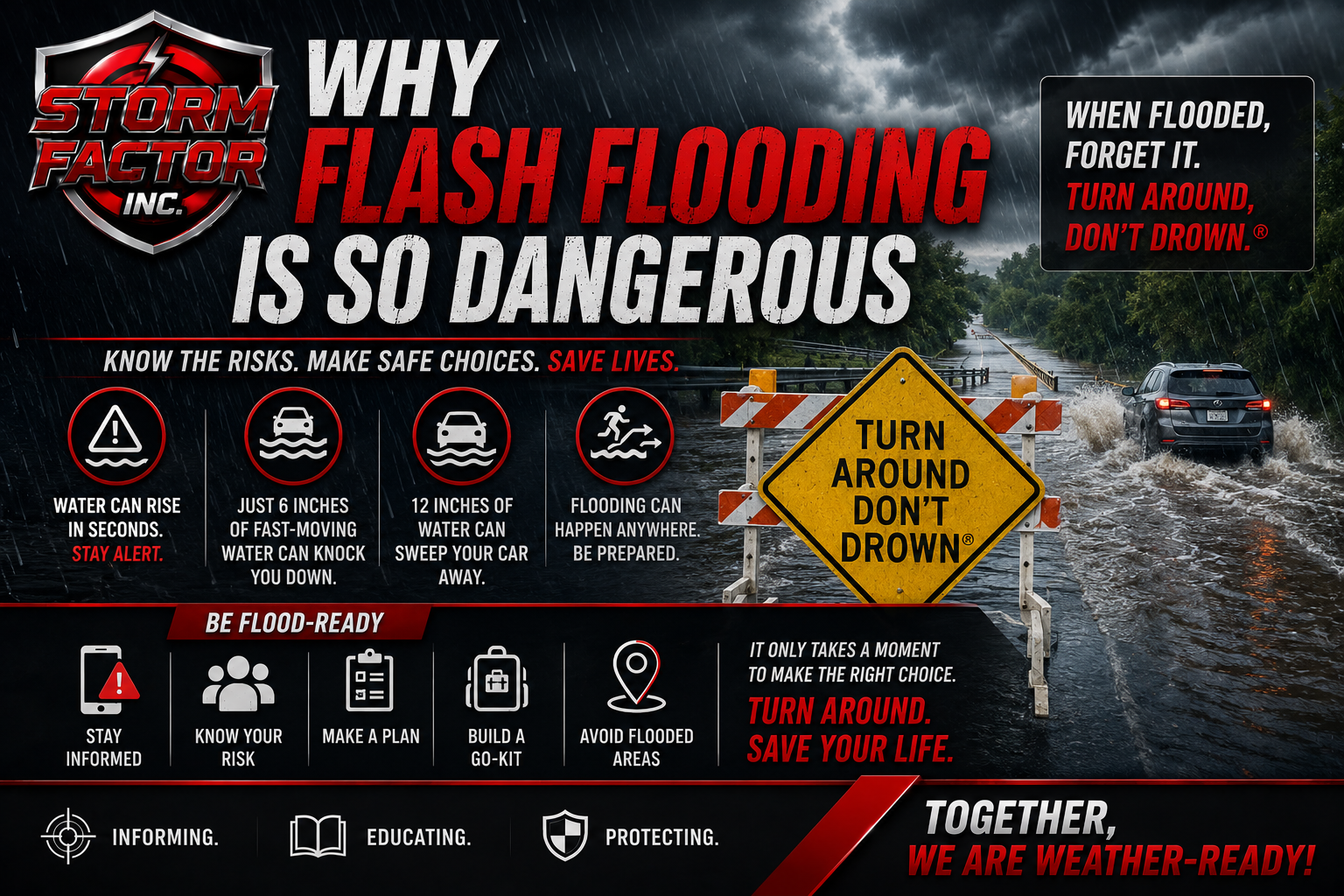
- Six inches of water can cause a driver to lose control of a vehicle.
- Twelve inches of water can carry away many passenger cars.
- Two feet of rushing water can sweep away most vehicles, including trucks and SUVs.
Floodwaters can also hide road damage, sinkholes, washed-out pavement, debris, and downed power lines.
Floodwaters Are Often Contaminated
Floodwater is rarely clean. It may contain:
- Sewage
- Chemicals
- Fuel and oil
- Sharp debris
- Dangerous bacteria
Direct contact with floodwater can pose significant health risks. If you come into contact with floodwater, wash thoroughly as soon as possible.
Flash Floods Often Occur at Night
Flooding becomes even more dangerous after dark. Drivers may not recognize flooded roadways until it is too late, and rapidly rising water can catch sleeping residents off guard.
Because of this, it is critical to have multiple ways to receive weather warnings, especially while sleeping.
Turn Around, Don’t Drown®
The National Weather Service’s flood safety message is simple:
Turn Around, Don’t Drown®
If you encounter a flooded roadway, do not attempt to drive through it.
You may not know:
- How deep the water is
- Whether the road beneath is damaged
- How fast the water is moving
The safest choice is always to turn around and find an alternate route.
No destination is worth risking your life.
Flash Flood Safety Tips
Before heavy rain arrives:
- Monitor weather forecasts and alerts.
- Know if your home or workplace is in a flood-prone area.
- Identify multiple evacuation routes.
- Prepare an emergency kit with essential supplies.
During a flash flood warning:
- Move immediately to higher ground.
- Avoid creeks, streams, and drainage channels.
- Never walk or drive through floodwaters.
- Stay informed through trusted weather sources.
After flooding:
- Avoid standing water.
- Watch for damaged roads and bridges.
- Be aware of electrical hazards.
- Follow local emergency management guidance.
Final Thoughts
Flash flooding is often underestimated because it can occur with little warning and may not appear as dramatic as other weather hazards. Yet it remains one of the leading causes of weather-related fatalities in the United States.
The next time heavy rain threatens your area, remember that floodwaters can be deceptively powerful and extremely dangerous. Staying informed, acting quickly, and following the simple rule of Turn Around, Don’t Drown® can save lives.
At Storm Factor Inc, our mission is to help communities stay informed and prepared before hazardous weather strikes. Awareness and preparedness remain our strongest defenses against the dangers of flash flooding.
Stay weather aware. Stay informed. Stay safe.


